


Dog Dry Skin: Causes, Signs and the Bath Routine That Helps
Dog dry skin shows up as flakes on the bed, a dull coat and a dog that won’t stop scratching. Most of the time it is not a disease. It is the skin losing moisture faster than it can replace it, and the usual causes are dry winter air, a diet short on fatty acids, parasites, allergies and, very often, the bath itself. Below are the causes, the signs that mean a vet visit, and a bath routine that stops the flaking instead of feeding it.
What causes dry skin on dogs?
Dry skin on dogs happens when the skin’s protective layer of natural oil (sebum) is stripped away or not produced well enough. The most common causes are:
- Bathing too often or with the wrong product. Harsh shampoo, hot water and soap left in the coat all pull oil out of the skin.
- Dry air. Cold weather outside and forced-air heating inside dry out skin through the winter months.
- Diet. Food low in omega-3 and omega-6 fatty acids leaves the skin barrier weaker.
- Parasites. Fleas and mites cause scaling and scratching that looks a lot like dryness.
- Allergies. Food and environmental allergies inflame the skin and damage its barrier.
- Underlying conditions. Hormonal disorders such as hypothyroidism and skin disorders such as seborrhea cause ongoing flaking.
The first three are the ones you can fix at home. The last three need a vet to confirm.
Signs your dog has dry skin
Part the coat along the back, the base of the tail and the belly, where flaking shows first.
| What you see | Likely cause | Next step |
|---|---|---|
| White flakes, dull coat | Simple dry skin | Change the bath routine |
| Flakes worse in winter | Dry indoor air | Add humidity, bathe less |
| Dry flaky skin and scabs | Scratching, possible allergy | Check for fleas, see a vet |
| Greasy scale and odor | Seborrhea or yeast | See a vet |
| Hair loss in patches | Mites, infection, hormones | See a vet |
White flakes on an otherwise healthy dog usually mean plain dryness. Scabs, odor or bald patches mean a vet visit.
Why the bath is often the problem
The bath is the one thing you control completely, and it is where a lot of dryness starts.
- Too many baths. Every shampoo bath removes some of the skin’s oil. Bathe before it has time to recover and the skin stays dry. Our guide on how often you should bathe your dog breaks down the right interval by coat type and lifestyle.
- Hot water. Water that feels nice to you is too warm for a dog’s skin and speeds up moisture loss. Lukewarm is enough.
- Shampoo left behind. Residue sitting against the skin is a common cause of itching after a bath.
- The wrong shampoo. Human shampoo is made for human skin, and perfumed products often irritate reactive skin. Use a fragrance-free dog shampoo or none at all.
How to treat dry skin on dogs at bath time
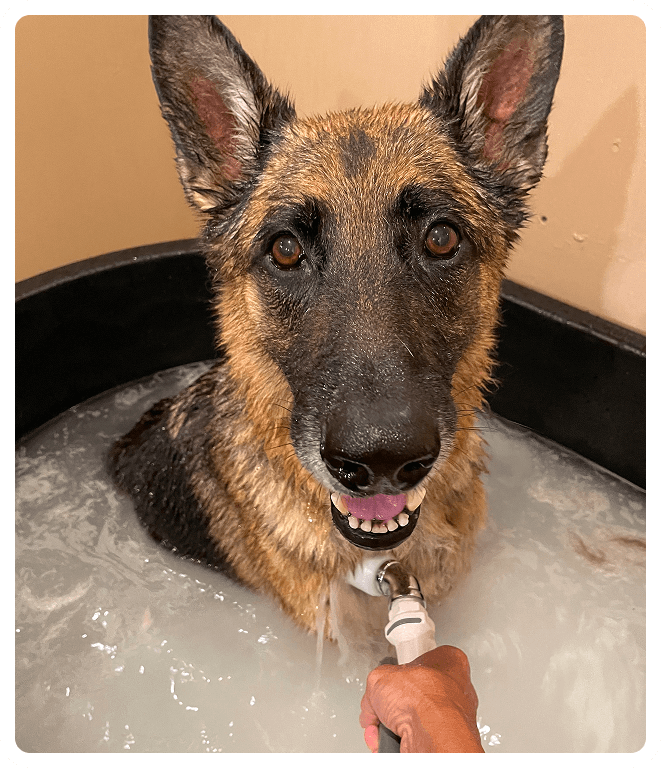
If your dog has dry skin and dandruff but no sores or scabs, start here and give it a few weeks.
- Brush first. It lifts loose flakes and spreads the coat’s natural oil.
- Use lukewarm water. If it feels warm on your wrist, cool it down.
- Use less product, or none. If you use shampoo, pick a gentle, fragrance-free dog shampoo and dilute it. If your vet has prescribed a medicated shampoo for a skin condition, follow their directions instead.
- Rinse twice as long as you think. Keep going until the water runs clear and the coat no longer feels slick, especially in the armpits, groin and between the toes.
- Blot, don’t rub. Towel-dry gently and keep any dryer on a low heat setting.
- Space the baths out. Bathe only when the dog is actually dirty or smelly, not on a fixed weekly habit.
A dog moisturizer or a dog-safe lotion can help small dry patches on elbows or the nose. Skip human lotion, since dogs lick it off.
Where microbubble therapy fits

Microbubble therapy for dogs uses tap water filled with very small bubbles that travel down through the coat into the hair follicles and pores. The bubbles carry a negative charge, so dander, excess oil, dirt, yeast, bacteria and allergens are drawn to them and lifted off the skin. There is no soap, no shampoo, no scrubbing and no fragrance, which matters most for skin that is already dry or reactive. A session takes about fifteen minutes.
For a dog with dry skin, that means a thorough clean without the detergent that strips oil, and no residue left behind to itch. It is not a medicine and it does not replace vet treatment. What it does is clean the skin properly so the skin, and any treatment your vet prescribes, has a better chance to work.
Many groomers and vet clinics offer it. You can find a Thera-Clean location near you, or read about a Thera-Clean dog bath for home that works with the tub you already have. After any microbubble session the pores are open, so follow your groomer or vet’s advice on protecting the skin afterwards.
Other ways to help dry skin between baths
- Add humidity. A humidifier in the room where your dog sleeps helps through the heating season.
- Look at the food. Ask your vet about a diet or an omega-3 fish oil supplement that supports the skin barrier.
- Keep up flea control. Even a few fleas can keep a dog scratching and flaking.
- Use simple home remedies carefully. A thin layer of coconut oil can soften dry patches, and a colloidal oatmeal soak can calm itching. Our list of natural dog itch relief remedies covers how to use each one safely.
When dry skin is something else
If the flaking does not improve after a few weeks of gentler baths and better humidity, or you see scabs, odor, greasy scale or hair loss, book a vet visit. Dry, scaly skin is a symptom of several conditions:
- Seborrhea. A disorder of skin cell turnover that causes scaling, crusting and sometimes oiliness. The Merck Veterinary Manual notes most cases are secondary to another problem, most often allergies or hormonal disorders.
- Allergies. Food and environmental allergies often show as itchy, red or flaky skin.
- Mites and fungal infections. These cause scaling and patchy hair loss and need testing to confirm.
- Hormonal disorders. Conditions such as hypothyroidism often show up first in the skin and coat.
Our vet’s guide to skin conditions in dogs explains the tests a vet runs and the usual treatments.
Dog dry skin FAQ
How do you fix dry skin on a dog naturally?
Start with fewer baths, lukewarm water, a fragrance-free dog shampoo or none, and a long rinse. Add humidity at home in winter and ask your vet about omega-3s. For small patches, a thin layer of coconut oil helps.
What is seborrheic dermatitis in dogs?
Seborrheic dermatitis, or seborrhea, is a skin disorder that causes scaling, crusting and sometimes greasy skin with odor. Some breeds inherit it, but most dogs develop it because of another problem such as allergies or a hormonal disorder. It is usually managed with medicated shampoos and by treating the underlying cause.
Can dogs get psoriasis?
Psoriasis as people know it is not a recognized common condition in dogs. Thick, scaly patches on a dog are far more likely to be seborrhea, allergic dermatitis, mites or a fungal infection. Have a vet examine any raised, scaly patches.
What does dermatitis look like on a dog?
Dermatitis usually shows as red, inflamed skin with itching, licking or chewing at the spot. You may also see flaking, scabs, thinning hair or odor. Paws, belly, armpits and ears are the most common places to find it.
Which dogs are most prone to skin problems?
Breeds with inherited skin disorders and heavy skin folds tend to have more trouble. The Merck Veterinary Manual lists Cocker Spaniels, Basset Hounds and Dachshunds among the breeds most often affected by inherited seborrhea. Any dog can develop dry skin from bathing habits, diet or dry air.
Give dry skin a better bath
Most dog dry skin gets better once the bath stops stripping the skin’s oil. Bathe less, rinse longer, skip the fragrance, and add humidity in winter. If you want a deep clean with water alone, find a groomer or vet near you that offers microbubble therapy.